When the Body Locks Up
The Shanghan Lun (傷寒論)—one of the oldest clinical manuals in East Asian medicine—contains a passage that has guided herbalists for nearly two thousand years:
“When the back of the neck and upper back are stiff, and there is no sweating, use Galgeun-tang.”
No long explanation. No second option. If the body is locked with tension, reach for kudzu root first.
Galgeun-tang (葛根湯), the “Kudzu Root Decoction,” became one of the most widely prescribed formulas in Korean, Chinese, and Japanese herbal medicine. To this day, it remains one of the most commonly used formulas for early-stage colds with neck and shoulder stiffness—because its job isn’t to fight the cold directly. Its job is to release what’s locked.
The herb at the center of that formula is Galgeun (葛根)—kudzu root.
What is Kudzu Root?
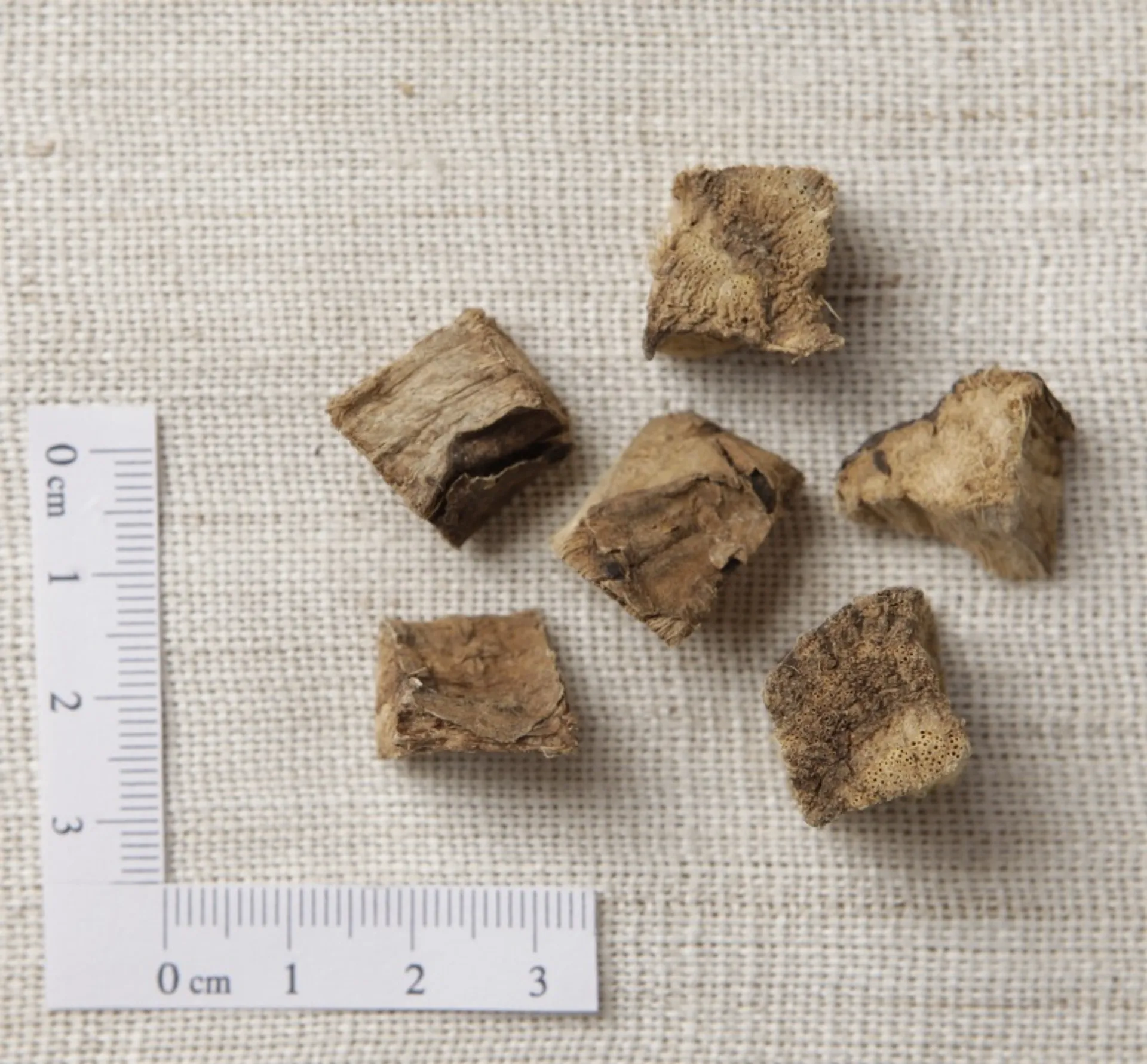
Kudzu root (Pueraria lobata) is the dried root of a vigorous climbing vine native to East Asia. The plant itself is famously tenacious—growing rapidly, climbing over trees, and reaching deep into the earth. But in Korean medicine, the real power lies underground, in roots that can extend several meters deep and grow as thick as a human arm.
The Donguibogam (동의보감) describes kudzu root simply and clearly: “Its nature is mild (平), its taste is sweet (甘), and it has no toxicity.” It then assigns kudzu root a specific role that no other herb fills quite as well:
“解肌發表, 生津止渴” : “It releases the muscle layer, opens the surface, generates fluids, and quenches thirst.”
That first phrase—Hae-gi (解肌), “releasing the muscle layer”—is what defines kudzu root in Korean herbal medicine. If licorice root is the “Great Harmonizer,” kudzu root is the Deep Releaser: the herb that reaches into tense, locked-up tissue and opens it from the inside out.
The key to this releasing power is puerarin, a C-glycosyl isoflavone found in unusually high concentrations in kudzu root. Puerarin is what makes kudzu root unlike any other herb in the formula.
The Science: What Makes Kudzu Root Work
Modern research has identified puerarin as kudzu root’s signature bioactive—and the numbers are striking.
Puerarin — The dominant isoflavone. Puerarin has been reported to support vasorelaxation via endothelium-related NO pathways and ion-channel related mechanisms, helping blood vessels relax and widen. In animal microcirculation studies, puerarin significantly improved perfusion and vessel caliber. In China, puerarin injection is clinically approved as a vasodilator for cardiovascular conditions.
Daidzein — Another key isoflavone with antioxidant and phytoestrogenic activity. Working alongside puerarin, daidzein supports the herb’s traditional role in relaxing tense tissue and improving circulation.
Isoflavone Complex — In UVA-stressed human skin fibroblasts, kudzu root’s isoflavones reduced reactive oxygen species (ROS) by approximately 58% and boosted total antioxidant capacity by over 60%. Researchers also observed that puerarin blocks the aging phenotype in human dermal fibroblasts—keeping skin cells healthier under stress.
What Kudzu Root Does

Releases Muscle Tension — This is kudzu root’s defining role. Traditional Korean medicine calls it Saeng-jin Seo-geun (生津舒筋): “generate fluids and relax the muscles.” When tissue becomes stiff and dry from fatigue, kudzu root draws moisture back in and softens what’s locked.
Opens Blood Flow — Puerarin has been reported to support vasorelaxation via both endothelium-dependent (NO-related) and endothelium-independent (ion-channel) pathways. This is consistent with why kudzu root has been used for circulation support in East Asian medicine for over 2,000 years.
Protects Skin — In UVA-stress experiments, puerarin cut oxidative damage roughly in half while increasing antioxidant defense by over 60%. It was also associated with increased collagen-related expression under UV stress—supporting the skin’s ability to recover and maintain resilience.
Supports Recovery — The Donguibogam notes: “凡病酒及渴者 得之甚良”—“For alcohol-related illness and thirst, this herb works remarkably well.” Modern research supports puerarin’s broader role in recovery, from circulatory support to tissue repair.
Why Kudzu Root Belongs in Your Foot Soak
When Licorice Root harmonizes the formula and Cnidium warms the vessels, kudzu root does something neither can do alone: it releases.
After a long day, tension doesn’t just sit in your neck and shoulders. It settles downward—into heavy calves, stiff ankles, and feet that feel like they’ve forgotten how to relax. It’s a familiar pattern: the body tightens up, circulation slows, and muscles refuse to let go.
In warm water, kudzu root’s puerarin works alongside heat to support circulation in the feet and lower legs. The warmth opens the door; the herbal formula helps it along. Blood flows. Fluids move into tired tissue. And what was tight begins to soften.
This is what Hae-gi means in practice—not forcing muscles to relax, but giving them what they need to release on their own.
OVER THE WENZDAY: Kudzu Root, the Deep Releaser in Every Formula
Kudzu root is part of the 16-herb complex in all of our foot soak formulas, working alongside licorice root, ginseng, and cnidium to support deep release and circulation.
Foot Healing Day
A sunset-colored warm slush gel combining MSM with 16 herbal extracts including kudzu root. The gel retains warmth 2× longer than regular foot soaks, giving the herbal formula more time to work with heat—supporting the release of deep-seated tension in heavy, tired legs.
Foot Relaxing Day
A mint-green mineral spa combining Epsom salt with 16 herbal extracts including kudzu root. While magnesium relaxes surface muscles, kudzu root works deeper—supporting blood flow and the kind of release that makes legs feel light again after a long day.
Emerald Sparkling Day
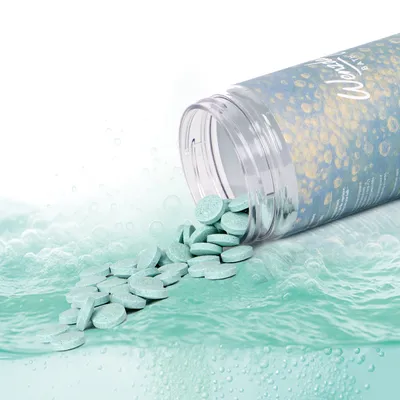
An effervescent bath fizz blending 16 traditional herbal extracts with rich carbonation. As fine bubbles stimulate the skin’s surface, kudzu root’s isoflavones work from inside the formula to support circulation and full-body release.
The Donguibogam records: “解肌發表, 生津止渴”—release the muscle layer, generate fluids. For centuries, that’s been kudzu root’s assignment: not to overpower, but to open what’s closed and soften what’s locked. In our formulas, it does exactly that—one warm soak at a time.