The First Thing You Notice Off the Plane
The shoes you boarded in are not the shoes you land in. After eleven hours in the air, the laces go tighter, the strap that was loose at the gate has gone snug, and the soft tissue around the ankles has the puffy, sluggish quality of a body that has been still for too long. It is mundane and almost universal, which is why it rarely gets the careful attention it deserves.
This is the part of long-haul travel nobody talks about. Not the jet lag, not the dry skin, not the bad sleep. The feet. And the people most familiar with what they do at the end of a long flight are the cabin crews who walk those aisles for a living.
What’s Actually Happening Below Your Knees
The simplest explanation is also the most accurate. Hours of sitting still let blood pool in the leg veins, and the seated position itself raises pressure in those veins, pushing fluid out of the bloodstream and into the surrounding soft tissue. The cabin’s dry, low-pressure air does not help, but prolonged stillness appears to be the main driver, more than cabin altitude itself.
Most clinical guidance is plain about this. Foot and ankle swelling on long flights is common and usually harmless. It usually settles after you start moving again, often within hours or by the next day. What is worth knowing, and worth not panicking about, is the line between ordinary puffiness and something else. Symmetrical swelling across both ankles, eased by walking and elevation, is the standard story. If swelling concentrates in one leg, comes with calf pain or a feeling of heat in the skin, that is a different conversation, and a clinician’s conversation rather than a foot-soak one.
What Cabin Crews Have Quietly Worked Out
People who fly for a living tend to converge on the same small handful of habits. Compression hosiery. Walking the cabin every hour or so. Steady water. Closed window blinds at night, because darkness helps people rest and sleep. None of this is dramatic. None of this is news. Most of it is the kind of advice that sounds like common sense after you have heard it twice.
What is more interesting is what happens after they get off the plane. Long-haul crews are a community of quiet practitioners of post-flight recovery, and the routine they fall back on is more domestic than spa. Get to the room. Drop the bag. Lie down. Get the feet above heart level. Let gravity do for fifteen minutes what a cabin worked against for eleven hours. Then, very often, a warm foot soak before bed.
This sequence is so consistent across crew communities that it feels less like a tip and more like a tradition. There is a reason for that. The body that just stepped off a plane is not asking for a workout, an aggressive massage, or a cold treatment. It is asking for stillness, warmth, and the kind of slow re-circulation that comes from elevation followed by gentle heat.
The First Twenty Minutes in the Hotel Room
Of those two moves, the warm soak is the one most worth slowing down about. A foot bath is not doing magic at the chemical level. The honest reading of the recent literature is that the immediate effect of a warm foot soak is perceived relaxation more than any dramatic change in circulation, and that the comfort of a soak is best explained by the warmth, the time off your feet, and the ritual itself. The ritual is the active ingredient.
That is why a foot bath at the end of a long flight feels so much bigger than the sum of its parts. Sitting down. Putting the feet in warm water. Twenty minutes where nothing else is required. After eleven hours of being a passenger, this is the first time in a day the body has been allowed to do nothing on its own terms. For why warmth at the feet feels disproportionately settling at the end of a day, the contrast between a foot soak and a full bath covers it more carefully.
A Korean Evening Reset After a Long Flight
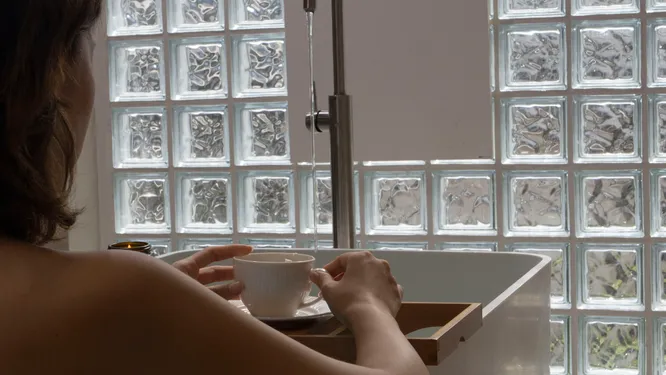
In Korean tradition, this kind of evening foot bath has a name. Warm foot bathing long predates the modern wellness industry in Korea and across East Asia, and jokyok is the Korean name for it. The rationale, in classical hanbang terms, is less about a single ingredient and more about how a blend of herbs warms the body at the close of a long day. In Donguibogam and later Korean health culture, warm feet and restful balance are often discussed together.
In Korean traditional health language, the phrase that comes up over and over is 두한족열, cool head and warm feet. It is meant as a description of balance, and as a quiet corrective. A long-haul day ends with the opposite arrangement. Head a little hot from cabin air and dehydration. Feet cold, swollen, and heavy. The evening foot bath is the simplest possible way to put the body back in order.
The format matters here. A foot soak that loses its heat after five minutes is not really a soak, and it does not last the length of an evening reset. The Korean herbal soaks built around longer heat retention and a multi-herb blend are designed to fold into the last twenty minutes before sleep, rather than be rushed through.
Which Soak Fits Which Tiredness

After a long flight, the tiredness is not all one kind. There is the heavy, swollen, mostly-still kind that comes from hours of sitting. And there is the muscle-tight, calf-burning kind that comes from running through three terminals, lifting bags, and sleeping at strange angles.
The two ask for slightly different things at the end of the day.
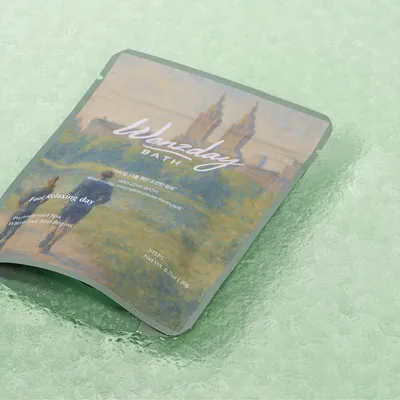
For the slow, swollen, evening-recovery feeling, OVER THE WENZDAY’s Foot Healing Day is the closer match. It is built around MSM and a sixteen-herb hanbang blend, in a slushy-gel format designed for a slower, more lingering soak rather than a rushed one.
For the tighter, more athletic kind of post-flight fatigue, Foot Relaxing Day fits better. It pairs the same herbal stack with Epsom salt and is geared toward post-travel unwinding and a warming end-of-day ritual, the way a cool-down after a hard session would be.
A tired leg after a long flight is not always the same kind of tired leg. The heaviness from being still and the tightness from rushing do not land the same way, so the soak does not have to be the same either.
If swelling comes on suddenly, affects only one leg, or comes with pain or heat, it is better not to treat it as ordinary travel fatigue. Seek urgent care for swelling with chest pain or shortness of breath. If you have diabetes, circulatory conditions, or reduced sensation in your feet, check with a professional before using hot foot soaks.
Fifteen quiet minutes the night you land can change how the next morning starts.