The Sensation You Cannot Name in English
You know the feeling. The head runs a little hot at the end of the day, faintly buzzing, faintly inflamed. The scalp is warmer than it should be. Thoughts arrive at the pillow without permission. Meanwhile the feet are cold, almost separate from the rest of the body, the kind of cold that wool socks do not entirely fix.
In English we tend to treat these as four problems. Trouble sleeping is one conversation. Hot flushes are another. A scalp that runs oily and warm by evening is filed under skincare. The cold feet under circulation. The vocabulary scatters them across four shelves of the wellness aisle, and four different products line up to address them.
Korean traditional medicine does not see four problems. It sees one pattern.
A Frame Western Wellness Does Not Have
The Korean phrase is 수승화강 (suseung-hwagang). Translated literally it means water energy rises, fire energy descends. The body is healthy, in this reading, when cool water-energy moves upward toward the head and warm fire-energy settles downward toward the feet. The phrase that names the opposite arrangement is 상열하한 (sangyeol-hahan): heat above, cold below. Hot head, cold feet. The body out of order.
Once you have the frame, the four problems collapse into one. Insomnia at the pillow, a flushed face after a hard conversation, the scalp that runs warm and oily by evening, the cold feet that never quite warm up under the duvet. They are not four conditions. They are one heat-distribution pattern, presenting at four addresses.
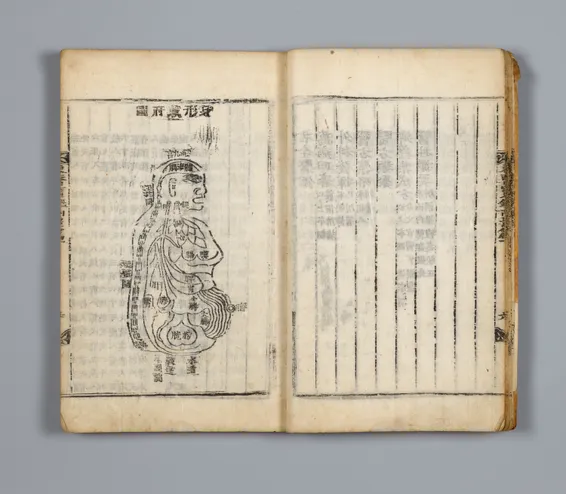
This is not a marketing reframe. The pattern appears across Donguibogam, the seventeenth-century Korean medical compendium that UNESCO added to its Memory of the World register, and across the broader hanbang tradition that preceded and followed it. Korean hanbang clinics still organise their consultations around it today, and Korean health forums in May 2026 surface tens of thousands of posts on the term, most of them tying it to the specific symptoms that English wellness handles separately.
The English-speaking wellness aisle has not yet learned to name this pattern. It is something close to a vocabulary gap.
Not Only Korean
The frame is older than the Korean tradition and broader than it. Classical Chinese medicine carries the same logic under 水火既濟, the completed harmony of water and fire, the state in which fire has descended and water has risen to their proper places. In the broader Philippine folk medicine tradition that hilot belongs to, imbalance is read in humoral terms of heat and cold, and warm work at the lower body is part of how excess heat above is settled. Across Southeast Asia, the older bodies of medicine recognise something close to this architecture, sometimes by different names.
What distinguishes the Korean tradition is partly the precision of its texts. Donguibogam sets the principle out in unusually clear language, and a long Korean clinical practice has worked through the day-to-day applications. The frame survives in modern hanbang because it produced reliable correctives across centuries, not because it sounded poetic.
Why the Feet, Specifically
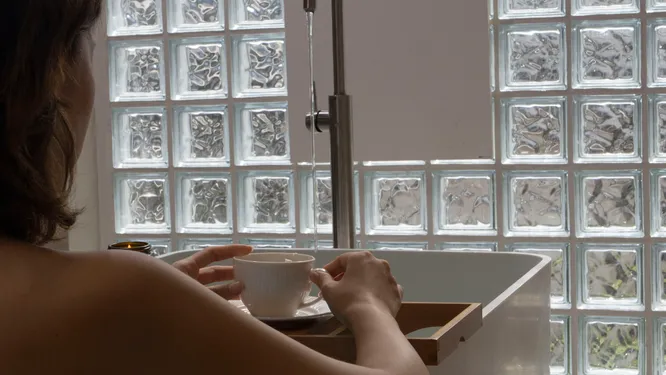
The instinct in English wellness is to cool the head when the head is hot. Cool the pillow. Open the window. Take something. Hanbang’s instinct is the opposite. It does not ask you to do anything to the head. It asks you to warm the feet.
There is a quiet physiological reason this works, one that modern research has slowly clarified. Warming the feet draws blood toward the periphery. The body radiates heat outward through the dilated vessels in the soles and ankles. Core temperature drifts gently down. The brain, which prefers a slightly cooler core to fall asleep, receives the signal it was waiting for. The pattern Korean tradition describes as fire descending and water rising is, in the language of modern thermoregulation, distal vasodilation followed by a drop in core temperature. The two vocabularies are describing the same arc.
This is also why a foot soak does what a head-cooling product cannot. The head does not want to be acted on directly. It wants the body around it to be in order. The feet, warm and slightly heavy by the end of the soak, are the closest, simplest lever the body has.
What the Principle Looks Like in Practice
The Korean evening soak that emerges from this frame is unhurried. Warm water, somewhere in the range of thirty-eight to forty degrees Celsius, comfortable rather than hot. Fifteen to twenty minutes, an hour or so before sleep. The phone is somewhere else. The lights are low. The point is not the temperature or the timer. The point is that for the length of the soak, the warmest part of the body is at the lowest point. The arrangement the day inverted has been quietly restored.
The format of the soak matters more than the wellness aisle usually admits. A bowl of warm water cools in five minutes, and the principle does not have time to land. A soak that holds its heat for the full length of an evening reset is what the tradition assumed, and what the Korean herbal soaks built around longer heat retention and a multi-herb blend are designed to deliver.
A Foundation, Not a Fix
Once the frame is in place, a great many evening complaints start to look less like individual problems and more like one small, daily correction asking to be made. Future posts will return to the specific cases. The perimenopausal evenings where heat refuses to descend. The unsleeping nights of exam season. The postpartum body still finding its balance. Each of those is a chapter in the same book.
The shorter form is the one Korean tradition has been quietly repeating for centuries. Warm feet. Cool head. The order matters.
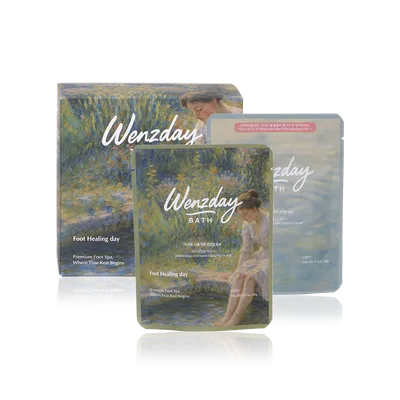
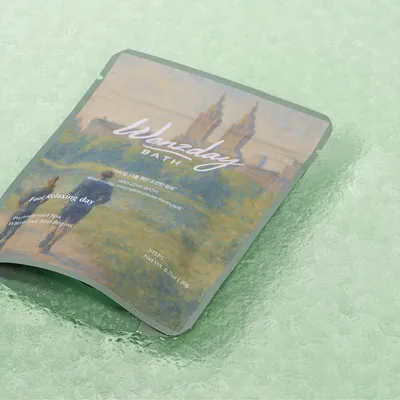
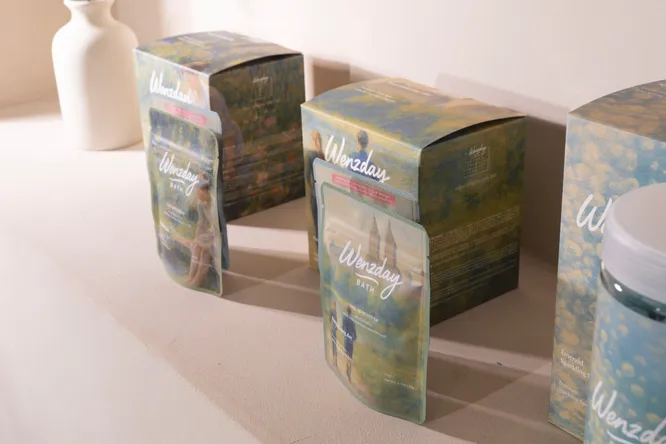
OVER THE WENZDAY’s Foot Healing Day and Foot Relaxing Day are formulated within this principle, around a sixteen-herb hanbang blend designed for the slower, heat-holding soak the tradition assumes. For the longer view on how this kind of evening practice is built, jokyok is the Korean word for it and the place to start.
If you have diabetes, peripheral neuropathy, untreated hypertension, or any condition affecting circulation or skin sensation in the feet, check with a clinician before adopting warm foot soak protocols.