What Korea Searches for in June
There is a simple way to watch a whole country’s skin concerns shift with the seasons: look at what it searches for. In Korea, searches for athlete’s foot (무좀, mujom) climb every summer and reach their highest point in June. They start rising in April and peak in the heat of midsummer.
The reason is not mysterious. Athlete’s foot, or tinea pedis, is a fungal infection, and the fungi behind it like exactly what summer feet provide: warmth, moisture, and skin that never quite dries out between the toes. Socks stay damp all day. Calluses build up. That is why almost every piece of advice eventually lands on the same point. Keep your feet dry. When symptoms are clear or persistent, that is a case for antifungal treatment rather than lifestyle care alone. This piece is not about treatment; it follows one plant through the ordinary habit of washing, drying, and resting summer feet.
What is more interesting is that inside this very ordinary habit of washing and drying feet sits a plant with a long and specific history in Korea.
A Weed, a Namul, and a Foot Soak Ingredient
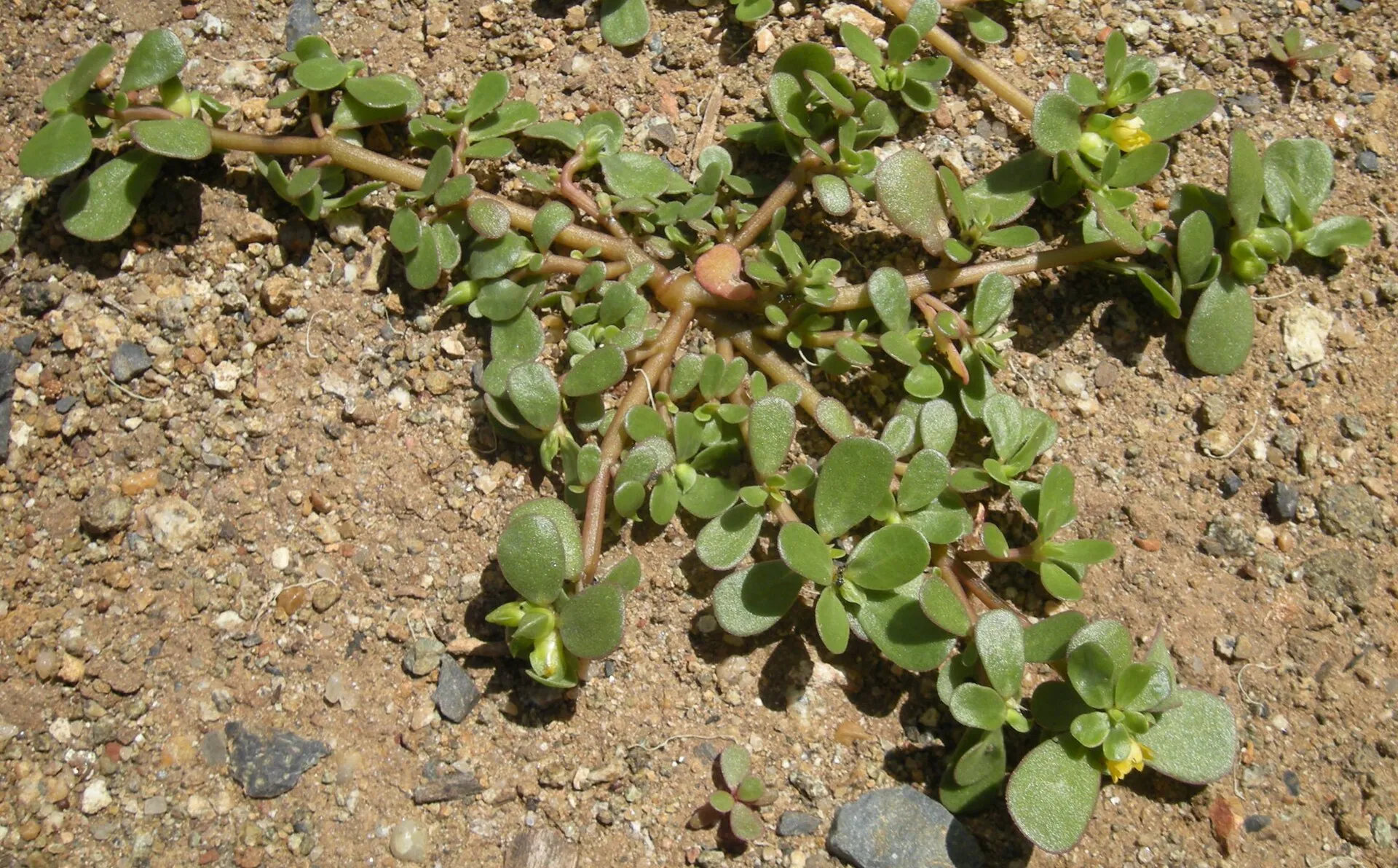
Most of the world knows purslane, if at all, as a weed. It grows in sidewalk cracks and field margins, survives being stepped on, and keeps living long after it is pulled up. Farmers treat it as something to remove.
In Korea, it is not just something to pull up. Purslane is eaten as a namul, a seasoned vegetable side dish, and because it is unusually rich in omega-3 fatty acids for a plant, it is sometimes called a longevity green. It has also been handled as a medicinal material in East Asian traditional medicine for a very long time.
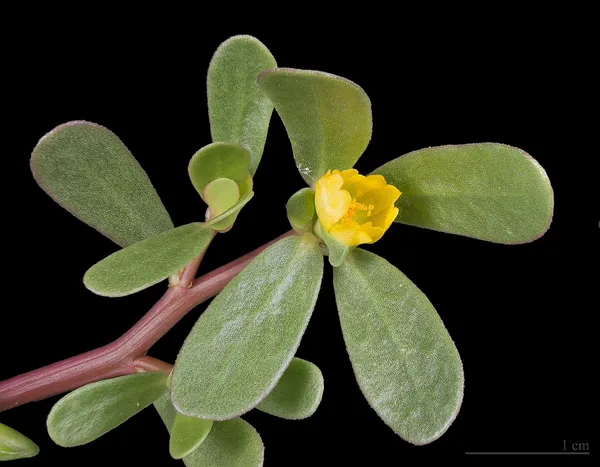
Its Korean name is soebireum (쇠비름). The classical name is machihyeon (馬齒莧), “horse-tooth herb,” after the shape of its leaves, and it is also called ohaengcho (五行草), the five-element herb, because it carries five colors at once: green leaves, red stems, yellow flowers, white roots, black seeds. The botanical name is Portulaca oleracea.
And this plant sits in the full ingredient list of Over the Wenzday’s foot soak gels, listed as Portulaca Oleracea Extract, the name purslane goes by on an ingredient label. A plant eaten as a side dish and used as a folk remedy, now inside a gel you soak your feet in. How did it get there?
What Traditional Records Say
The Dongui Bogam, Korea’s foundational medical encyclopedia completed in 1610 and first published in 1613, records machihyeon (purslane) like this:
性寒, 味酸, 無毒. 主諸腫惡瘡, 利大小便, 破癥結, 療金瘡內漏, 止渴, 殺諸蟲.
Cold in nature, sour in taste, non-toxic. Primarily treats swellings and stubborn sores, eases urination and bowel movement, breaks up internal masses, heals wounds from blades and internal bleeding, relieves thirst, and kills various worms.
“Stubborn sores” here means skin eruptions and inflammations that do not heal easily. The entry is short, but it places purslane clearly among the plants used for skin problems.
The way it was applied is even more specific. Older texts and folk practice describe boiling purslane down into a thick paste to spread on scabies, eczema, and boils, or crushing the fresh plant and laying it directly on the affected area. The Xinxiu Bencao (新修本草), the Tang-era revised materia medica, describes crushing the plant and rubbing it onto swellings and warts. Boiled, crushed, applied. For centuries this was a plant that met skin directly, long before it was anything you would call a cosmetic ingredient.
Why Modern Research Took a Second Look
In recent decades, purslane has drawn attention again, this time for what is inside it.
It is one of the richer plant sources of omega-3 fatty acids (ALA), which is part of why it is valued as an edible green in the first place. In cosmetics, Portulaca oleracea extract is used as a plant-derived ingredient for keeping skin comfortable. Ingredient references often describe it as a soothing, conditioning, and moisture-supporting material, and it appears widely in creams and similar everyday skincare.
Skin research has continued alongside this. Studies have examined purslane extract for its effect on skin barrier function, itch, and inflammatory response, and a clinical trial has tested a standardized purslane preparation on chronic hand eczema. Some early laboratory work has also looked at the extract’s microbial-related activity under test conditions. That work evaluates the raw material in a lab, though; it does not mean a foot soak prevents or treats any particular condition.
None of this guarantees any particular effect. Portulaca oleracea extract is better understood not as a treatment aimed at a specific condition, but as a plant-derived ingredient for keeping skin comfortable within the routine of washing and resting the feet. What the research does is explain why a plant with this long topical history keeps turning up in skin contexts.
From Skin to Feet, and Why a Foot Soak
One honest note first. The traditional external use was direct: a paste or crushed leaves placed on a sore. Soaking your feet in warm water is a gentler, looser practice, and it would be a stretch to claim any medicine-like effect.
Still, there is a reason purslane sits naturally in a foot soak.
Summer feet are dense with sweat glands and stay damp inside socks and shoes all day. Calluses thicken, and that warm, humid environment is exactly what fungi prefer. That is why athlete’s foot rises in summer and comes back year after year. Set that beside purslane’s traditional use in herbal washes and soaks, and a warm foot soak sits not far from that grain. This is not a claim about efficacy, only one way of reading an old practice and modern ingredient references side by side. In that light, purslane is an unsurprising guest in the place where feet get washed and rested.
The fact that athlete’s foot peaks in the search bar in June is, read another way, simply the season when the most people are paying attention to their feet. The core of foot care stays simple: wash well, and above all, dry well. A warm foot soak at the end of the day is a way to rinse the feet and let them settle, and paired with the habit of drying them properly, it is a reasonable way to look after your feet through one humid season.
An Old Record for a Common Plant
Common enough that most people walk past it, purslane carries a long and specific history. Boiled or crushed and brought into direct contact with skin, it was used on sores and eruptions for centuries. Modern labs are now cataloguing what is inside that ordinary plant.
That is why Over the Wenzday’s Foot Healing Day and Foot Relaxing Day naturally include Portulaca Oleracea Extract as part of a 16-herb botanical blend. In the season when taking your socks off feels like a small gamble, here is that roadside plant again, met at the end of the day in the simple routine of washing your feet and drying them well.
Curious about the other herbs in Over the Wenzday’s foot soak gels? Read why heartleaf shows up in foot soaks, how Dano was a day for herbal self-care, and what ginseng does.
Images: Portulaca oleracea by Ethel Aardvark (CC BY 3.0) and Didier Descouens (CC BY-SA 4.0), via Wikimedia Commons.