Two Words That Mean Different Things
Walk through any wellness retailer in 2026 and the same word keeps showing up. Tatcha has a page titled “The Art of the Skincare Ritual” and sells Starter Rituals curated by skin type. Aesop’s own editorial asks customers to move beyond routine toward “partaking in ritual.” Aromatherapy Associates uses the language throughout its range, from the Morning Ritual Duo to bath-and-shower oils framed as morning and evening rituals.
Then there is the other side of the shelf. Augustinus Bader publishes “The Evidence Based Skincare Routine” and presents its moisturizers as powered by patented TFC8® technology. The Ordinary names hero products after their key active and concentration. Drunk Elephant builds its ranges around actives like vitamin C, retinol, glycolic acid, peptides, and caffeine.
Both sets of brands sell skincare. Only one set says ritual. The split is not aesthetic.
The distinction is not geographic in a strict sense. It is strategic: one language organizes value around sequence and experience, while the other organizes value around actives and proof.
The Structural Difference
Ritual is not just a marketing word here. It describes a product architecture built around time, sequence, and roles — not just molecules. Asian wellness has built brands on prescriptive structure for decades, while Western beauty has built brands on hero ingredients. When Asian brands exported, the word ritual came with them.
This is why Tatcha works. It transplanted Japanese beauty rituals into US prestige skincare and gave them a vocabulary buyers could read. It is also why K-beauty’s ten-step routine shifted the conversation in the mid-2010s: it taught Western beauty consumers to understand skincare as sequence — cleanse, prepare, treat, mask, seal — rather than as a collection of hero products. More recently, wellness language has moved even further in that direction, treating routines and rituals as structures that create calm, not just as product order.
Structure is the operative word. And structure is what Korean herbal medicine has always been about.
What Sovereign, Minister, Assistant, Envoy Actually Means
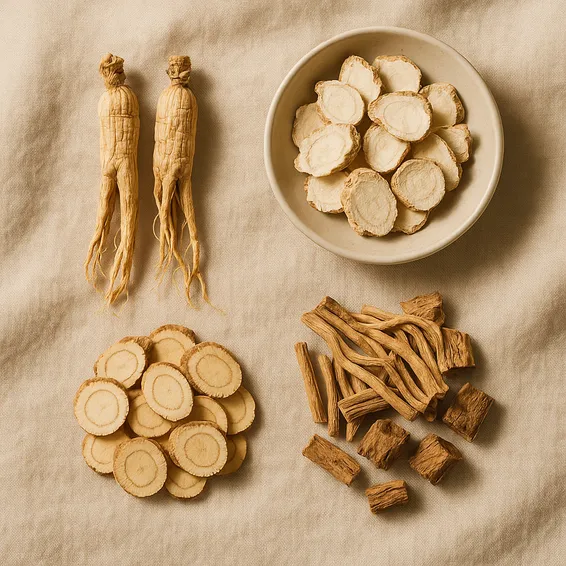
The four-role framework that organizes a Korean herbal formula long predates the modern active-ingredient language of beauty. In Korean and broader East Asian herbal medicine, formulas are built through differentiated roles, not ingredient stacking. In English, those roles are usually rendered as Sovereign (君), Minister (臣), Assistant (佐), and Envoy (使).
The Sovereign carries the lead action. The Minister reinforces it and extends it. The Assistant moderates harshness, balances the blend, or addresses secondary patterns. The Envoy harmonizes the formula and directs how the whole prescription lands in the body.
Korea’s Donguibogam (1613, UNESCO Memory of the World) preserves this way of thinking across herbal medicine, including external therapies. It organizes medicine around the body rather than around isolated ingredients, and its herbal logic is consistent with the old formulation principle summed up in 十方九草: licorice appears in nine out of ten prescriptions because it harmonizes the whole.
This is not interchangeable with a hero ingredient. It is the opposite of a hero ingredient.
Eight Herbs, One Map
A reader who has followed this blog has met most of these herbs already. What is worth seeing now is how they distribute across the four roles in a typical warming foot bath formula.
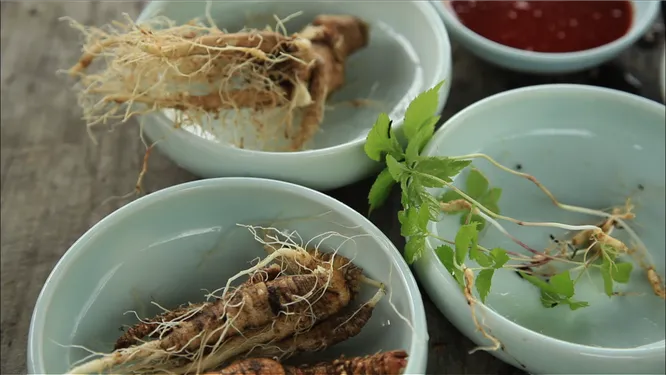
- Ginseng drives circulation and energy: Sovereign tier.
- Cnidium opens vessels and warms: Minister.
- Peony calms inflammation and supports the Sovereign’s reach: Assistant.
- Goji berry replenishes and softens: Assistant.
- Rhubarb clears heat where the Sovereign warms: Assistant in a balancing role.
- Kudzu loosens tension and aids release: Minister.
- Licorice harmonizes everything else: textbook Envoy.
- Houttuynia cleanses and supports the skin barrier: Assistant.
Eight herbs, four roles, one ritual. A foot soak built on this map is doing something a single-ingredient product cannot do: it is designed to work across five experiential fronts at once — warmth, herbal contact, circulation support, barrier softening, and a sense of release.
Why Feet, Specifically
Skincare can argue for a single hero because facial skin is thin, accessible, and exposed to a narrow range of stressors. The foot is a different problem. In Korean wellness logic, the feet are often called the body’s second heart — not because they replace the heart, but because warmth and circulation at the feet are treated as signals of whole-body balance. The guiding principle is 두한족열 — cool head, warm feet. The feet also matter because, in reflexology-based wellness traditions, they are treated as a map of the body — which is why a soak is never only about surface softening.
That changes the formulation brief. A foot soak has to warm, circulate, soften, and restore at the same time. Heat retention matters. Herbal delivery matters. Exfoliation matters. The value is not in one standout ingredient. It is in how the system works together.
A 2-step Korean foot ritual addresses the structure of the problem. Step 1 is a soak in a warm herbal stack. Step 2 is exfoliation and a hydration seal while the skin is still receptive. One ritual closes the loop on a system that single-active foot creams leave half-open.
For a closer comparison of foot soak versus full bath formats, the choice is less about preference than about what the body is asking for that day.
Where This Lives in a Real Menu
Wellness operators reading this are usually one question deeper. Where does a Korean herbal foot ritual fit in an existing menu?
For operators, the point is not three hero SKUs. It is three menu logics: recovery, circulation reset, and sensory experience.
A recovery-oriented foot ritual, for example, can lean on MSM and warming herbs, delivered in a slushy-gel format that holds heat past fifteen minutes (versus the five-minute drop typical of dissolving salts) — long enough to fit inside a treatment-room slot or a turn-down service. A circulation-focused ritual can pair magnesium with the same herbal stack, reading as an athletic cool-down. A gifting or amenity format can move away from recovery entirely: a powder that turns bathwater into pink jelly, designed for shared sensorial moments rather than recovery.
Different rooms, same four-role logic underneath. “Ritual” is the vocabulary that lets operators talk about menu placement, time, and role together — something a hero-ingredient framework cannot do.
Why Structure Wins
The point is simple: ritual cannot be rushed, and heritage must be translated, not aestheticized. The brands that get this right are the ones that carry the structure across, not just the storyboard.
For Korean herbal foot care, the structure is already there: a formula tradition older than the brands, recorded in a medical compendium older than American skincare, and built around a four-role logic that explains why sixteen herbs is a different category of product from one ginseng cream.
The next question is not what is in the soak. It is what the soak is for, and where in your day or your spa menu it goes.
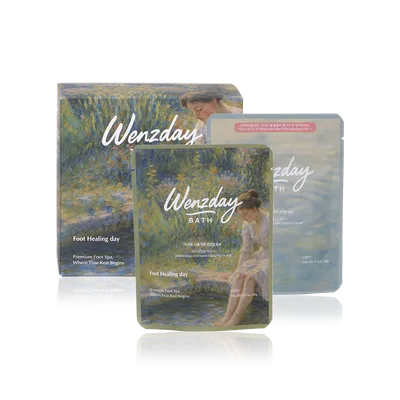
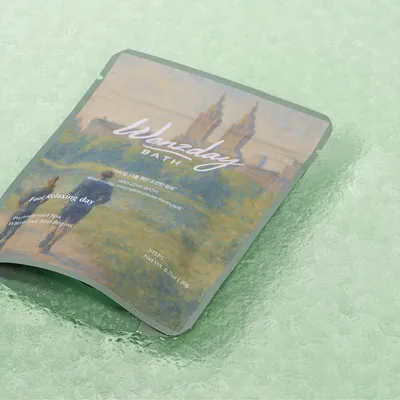
If you are sketching a herbal foot ritual into a 2026 menu, the Foot Healing Day and Foot Relaxing Day pages walk through the slush format in detail. For gifting or amenity briefs, Jelly Blossom Day is the format to look at.