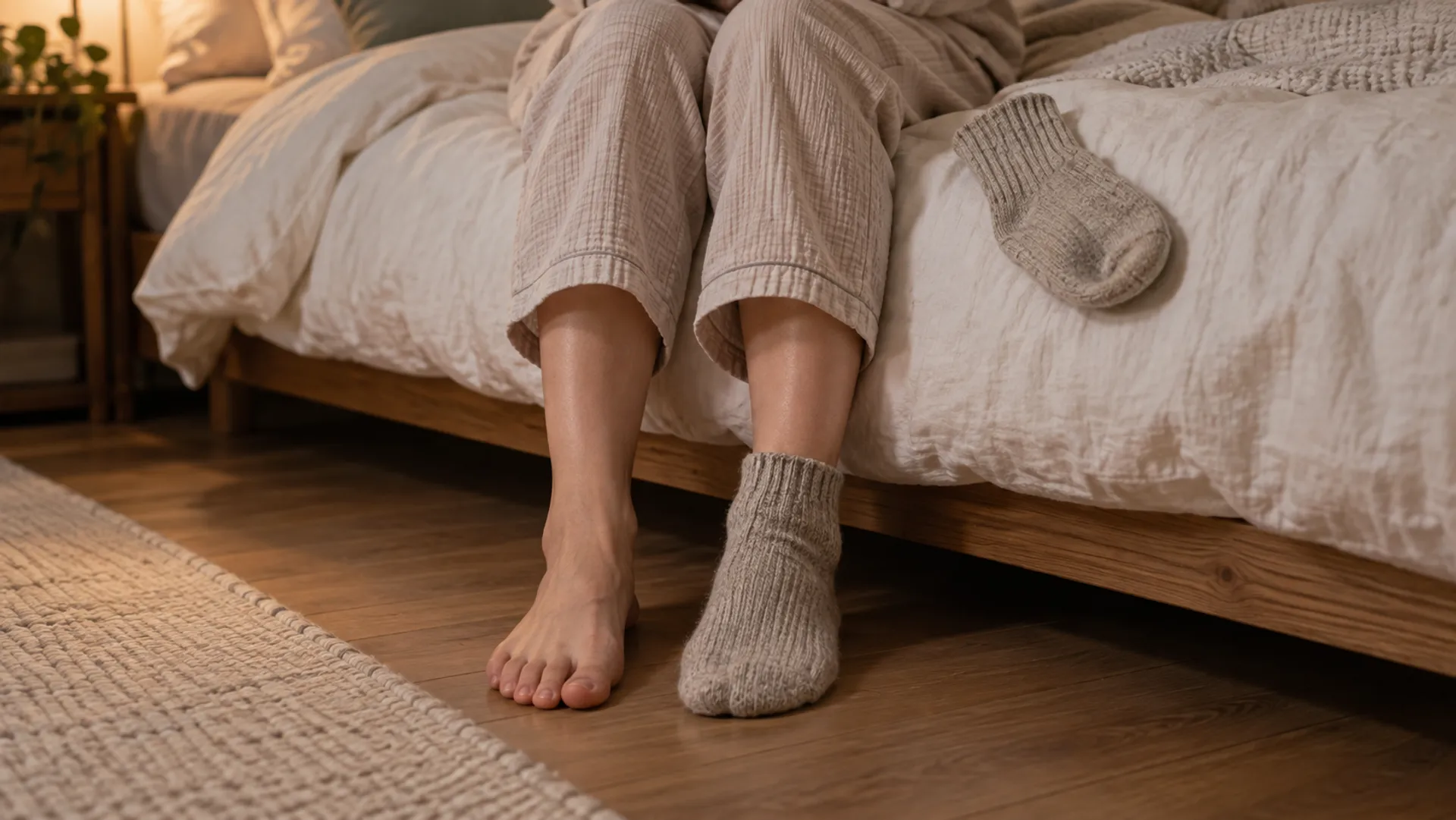
Cozy at first
Your feet are cold, so you pull on bed socks and slip under the covers. At first, it feels cozy. But as you try to fall asleep, your toes start to feel stuffy, and after a while your feet feel a little damp. In the end, you take the socks off under the covers and leave them beside the bed.
People say warm feet help you sleep. So should you keep the socks on, even when they are uncomfortable?
Not everyone needs bed socks. They can help people whose cold feet make it hard to fall asleep, but there is no need to put up with feeling hot or stuffy just to keep them on. The first thing to check is whether your feet actually feel comfortable in them.
Why warm feet help the body get ready for sleep
As you approach sleep, your core body temperature, the temperature deep inside your body, gradually falls. At the same time, your body releases heat outward through the skin of your hands and feet.
That may sound odd. If the body needs to cool down to sleep well, why are you told to keep your feet warm?
Gently warming your feet can widen the blood vessels in the skin, which may make it easier to release heat. In this way, the warmth of your feet can help your body get ready for sleep. That is why socks may help people whose feet stay cold and uncomfortable even under the covers.
- Gently warm your feet Soft warmth for cold feet
- Release heat through hands and feet The body's natural temperature regulation
- Ready for sleep Warmth that feels comfortable to you
A Korean study compared nights when six young men slept with and without socks in a room kept at 23°C (73°F). On the nights they wore socks, some sleep measures improved, including the time it took to fall asleep. However, the group was small, and there was no clear difference in how well the men felt they had slept or in their core body temperature. It is hard to take this to mean that everyone will get the same benefit.
Some people fall asleep more easily in socks, and others are more comfortable barefoot. If your feet are already warm, do they really need another layer? Alongside the advice to wear socks, it is worth paying attention to how they actually feel on your feet.
Beyond thickness, check for dampness and tightness
When your feet are cold, you may reach for thicker socks. But even socks that look dry and fluffy can feel different on the inside after you have worn them for a while. Once you are under the covers, check whether your feet feel hot or sweaty.
If the inside of your socks has become damp, it is better to dry your feet and change into a dry pair than to spend the night in them. Notice, too, whether the socks feel damp or clammy when you put them on. Take off the socks you wore during the day and change into a clean, dry pair for bed.
Check whether the elastic presses into your ankles or your toes are curled up inside. For sleep, choose comfortable socks that do not squeeze your ankles or toes and that let sweat and moisture escape well. Even if a thick pair keeps you warm, try a different thickness or size if it feels uncomfortable once you are wearing it.
The socks may not be the only issue. With a heavy duvet and the heating on, your feet may already be warm enough. Before adding another pair of socks, take a look at your whole sleeping environment.
Choosing for tonight’s feet
It becomes a little easier to decide if you go by how your feet feel when you get into bed.
- If your feet are cold and socks feel comfortable: Keep them warm with a clean, dry pair. Also check that the socks do not press on your ankles or toes, and that you do not get too hot under the covers.
- If your feet or socks feel damp: Take the socks off and dry your feet well, including between your toes. If you still want to keep them warm, change into a dry pair and see whether they get sweaty again.
- If your feet are already warm or the socks feel stuffy: You can take them off. If you are more comfortable barefoot under the covers, it is fine to fall asleep that way.
Being soft and thick does not automatically make a pair of socks right for you. When you lie down in them, notice whether your feet stay dry and comfortable, and whether you keep wanting to take them off. If you have been prescribed medical compression stockings, they serve a different purpose from ordinary bed socks, so follow the instructions you were given for wearing them.
If socks feel uncomfortable, warm your feet before bed
Your feet may be cold, yet you may dislike the feeling of lying in bed with socks on. In that case, you could try soaking your feet briefly in warm water before going to bed. Unlike wrapping your feet in socks while you sleep, a foot soak is time to warm your feet before you get into bed.
Prepare water that feels comfortably warm, not so hot that you have to endure it. There is no need to soak for longer in the hope of sleeping better. Afterward, dry your feet well, including between your toes, and if they start to feel cold again, keep them warm with a blanket or a comfortable pair of socks.
If you have diabetes or problems with sensation or circulation in your feet, talk with a healthcare professional before trying a foot soak. If your feet change color, or the coldness continues along with pain or numbness, do not simply put on more socks and leave it at that.
Tonight, go with what feels comfortable
If you want to take off the socks you put on before bed, pause and check your feet for a moment. Are they still cold? Are they sweaty? Is the elastic pressing in? Is it already warm under the covers?
If the warmth feels good, keep the socks on. If you are more comfortable barefoot, take them off. A sleep routine that suits you can start with noticing small discomforts like these.