Why do rough skin and white flakes keep coming back?
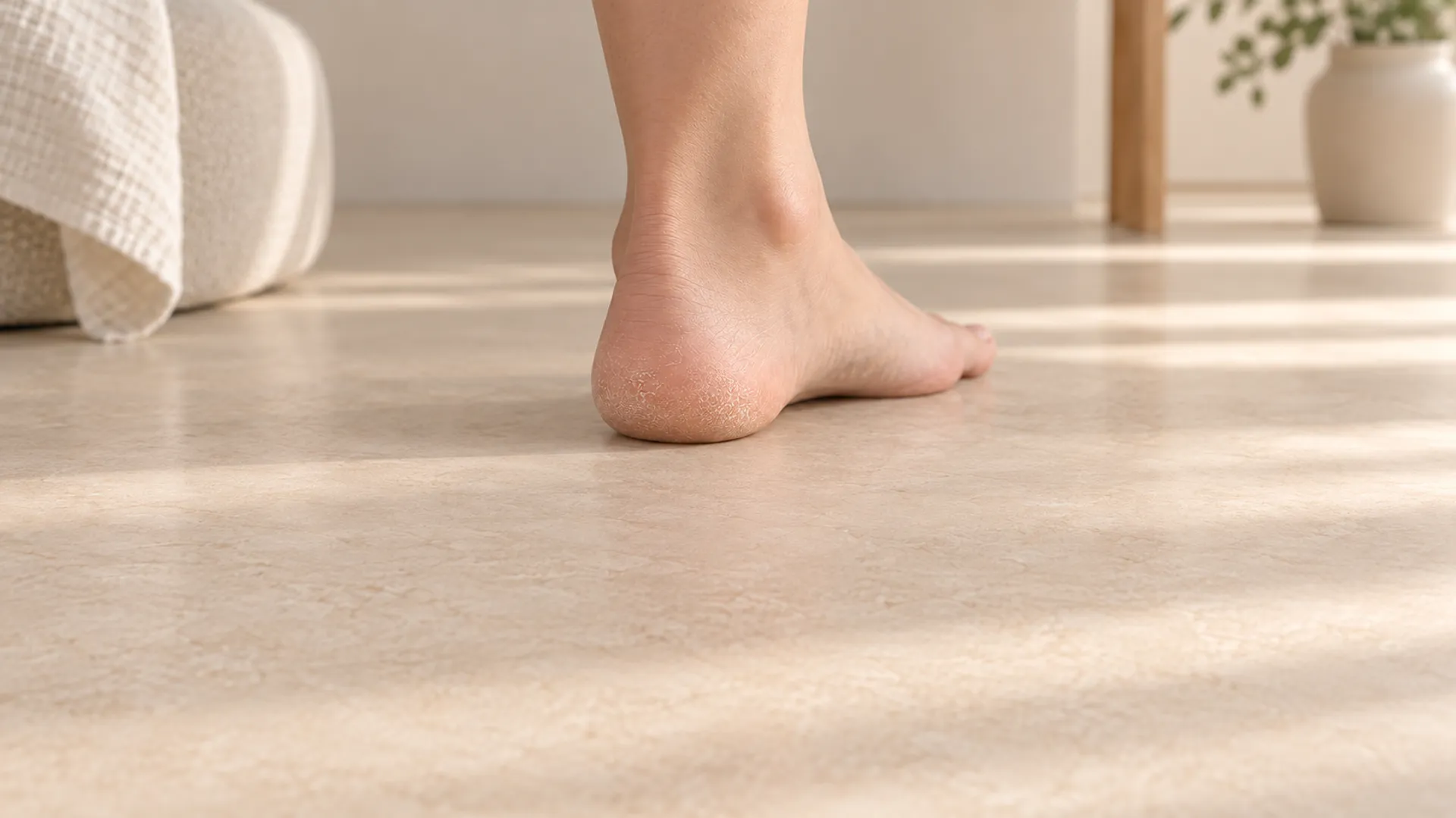
Your heels may feel smoother after you remove hard skin, only to become rough again. Sometimes the skin feels thick and firm; sometimes white flakes lift from the surface. Why are heels so prone to both?
The heel naturally has a thick outer layer of skin. Repeated pressure and friction can make it thicker, forming calluses. Dryness affects the surface, which can become rough and flaky. When thickened skin also becomes dry and hard, it may crack.
Heels naturally have a thick outer layer of skin
Dead skin cells make up the skin’s outermost layer. Cells formed deeper in the skin move toward the surface to become part of this layer, while older cells gradually shed. Throughout this process, the outer layer protects the skin from external irritation and helps keep moisture from escaping.
Its thickness varies across the body. It is thicker on the palms and soles than on the face or arms, and particularly thick on the heels. A Japanese study comparing the number of cell layers in normal skin from 301 people found that the heel had the most layers.
Your feet take the weight of your body whenever you stand or take a step. The skin in contact with the ground and your shoes is repeatedly exposed to pressure and friction. The heel’s thick outer layer helps protect the skin from these forces.
Repeated pressure and friction can cause calluses
Just as repeated rubbing can leave calluses on your palms, a similar change can happen on your feet. When the same area is repeatedly pressed or rubbed, the outer layer can grow thicker as the skin protects itself. The American Academy of Dermatology describes these hard, thickened areas as calluses.
Your heels bear weight when you walk or stand. If the same spot keeps getting pressed or rubbed inside your shoes, a callus can develop there. Tight shoes are not the only source of friction: loose shoes that let your feet move around can cause rubbing too.
This also helps explain why calluses can return after you remove them. Even if you reduce the thickened layer, continued pressure and friction can cause a callus to form again. If a callus keeps forming in the same place, check the shoes you usually wear and where your feet rub against them.
Dryness makes the skin feel rougher
Thick, raised areas of hard skin and white flakes lifting from the surface can appear together. The skin may have become thicker while also becoming dry.
When the outer layer loses moisture, the surface can become rough and flaky. If you notice more flakes, look at both whether a callus has formed and whether the surface has dried out.
Dry weather, spending a long time washing in hot water, and harsh cleansers can all dry the skin further. Washing for longer or scrubbing harder because your heels feel rough can make the dryness worse. These environmental factors may also help explain why your heels feel especially rough in autumn and winter.
Why does thickened heel skin crack?
Inside the heel is a pad of fat that cushions impact. When you put weight on your foot, pressure makes this pad spread outward, stretching the skin around the edge of the heel.
If that skin is dry and thickened, it can crack as it stretches. At first, the cracks may look like fine lines. With continued pressure, they can deepen, hurt when you walk, or bleed. Standing for long periods on hard floors and wearing open-backed shoes that do not support the heel can also contribute to cracking.
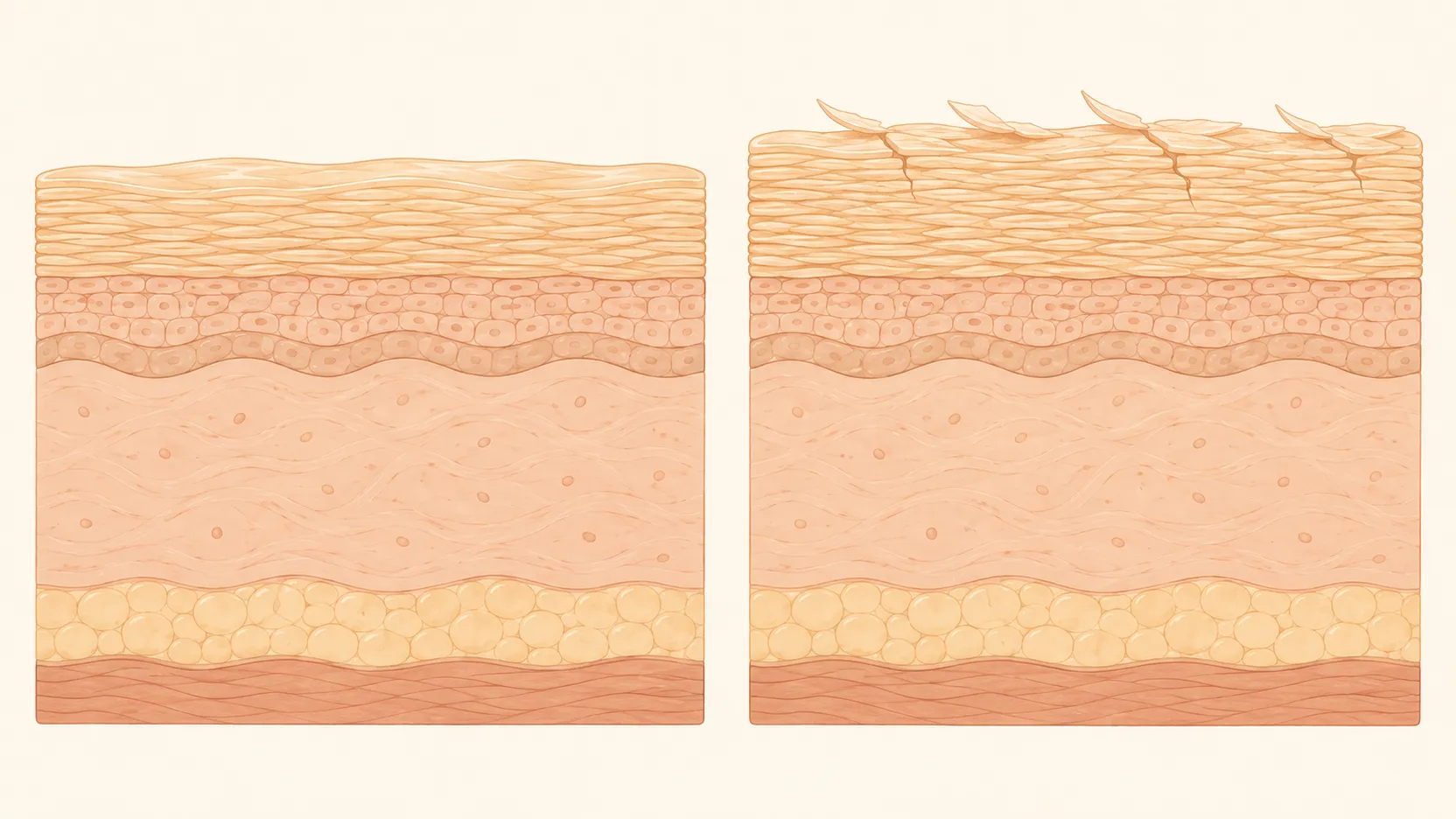
The right panel is a conceptual illustration of a dry surface with lifting flakes and small cracks.
When thickened heel skin cracks, both dryness and the pressure of bearing weight play a part.
Are white flakes always caused by dryness?
White flakes or thickened skin on the heels do not necessarily mean dryness or calluses. Athlete’s foot can also make the skin on the soles and heels thick and flaky. This form may cause little or no itching, so a lack of itch does not rule it out.
If you cannot confidently tell the difference by appearance, it is best to have a dermatologist check. If needed, a small sample of the flaky skin can be examined under a microscope for fungi. Athlete’s foot requires antifungal treatment; moisturizer alone cannot treat the infection. Softer skin after moisturizing does not prove that athlete’s foot is absent, either.
If you are unsure whether the flaking is caused by dryness or athlete’s foot, read “Athlete’s Foot Does Not Always Itch”.
Moisturizing can help dry heels
If dryness is making your heels rough, applying moisturizer can help. The American Academy of Dermatology’s advice on dry heels recommends gently patting your feet with a towel after washing, then applying cream before your heels are completely dry. This helps retain moisture. It also helps to spend less time washing in hot water.
If calluses keep returning in the same spot, check the size and fit of your shoes. Well-fitting shoes with soft soles and cushioned socks can help reduce pressure and friction. When removing hard skin, work gently and gradually, and avoid cutting it away with a knife or scissors. The UK’s NHS advice on corns and calluses recommends the same approach.
If cracks already hurt or bleed, stop removing hard skin and seek medical care. If you have diabetes, poor circulation, or reduced sensation in your feet, consult a healthcare professional before removing calluses yourself.
If flaking persists despite moisturizing, or the affected area spreads, have a dermatologist check the cause rather than continuing to rely on cream alone.