The Shoes Come Back Out
Every September, the same pattern shows up. The heat breaks, and running shoes that sat untouched all summer come back out. Some people are training for a fall marathon. Others are just picking running back up now that the weather finally allows it.
A few weeks in, the same complaint begins to crop up: a nagging discomfort on the inside of the heel, worst first thing in the morning. That’s usually when plantar fasciitis should come to mind.
What Plantar Fasciitis Actually Is
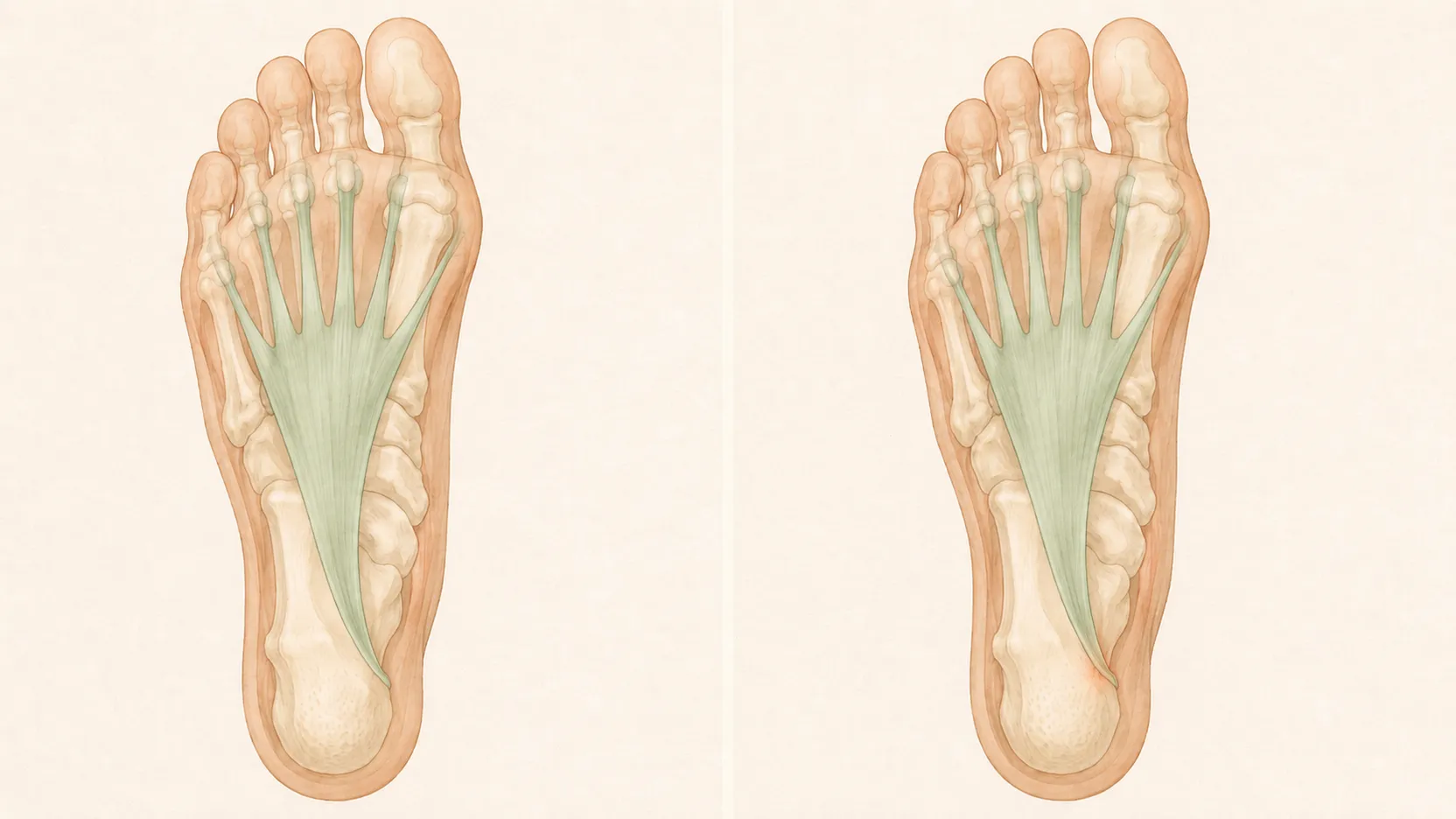
The plantar fascia is a thick band of connective tissue that runs from the inner heel bone to the base of the toes. It supports the arch with every step and helps distribute the load of each stride.
Under repeated stress, this tissue can accumulate microscopic damage and degenerative changes.
Signs That May Point to Plantar Fasciitis
A handful of signs tend to show up together:
- A sharp or burning pain on the inside of the heel the moment you put weight on it after getting up. It often eases after a few steps.
- The same brief pain when you stand up after sitting for a while.
- Pain that’s more noticeable after a run, or the next morning, than during the run itself.
- Tenderness when you press on the inner heel, right where the arch begins.
You can check the last one yourself. Sit down, cross one foot over the opposite knee so the sole faces you, and press your thumb into the inner edge of the heel, just in front of where the heel pad is thickest. There’s a firm spot where the fascia meets the bone — the same spot marked in the illustration above. Pain in that spot may point to the plantar fascia. It is also where a doctor may press to check for tenderness.
Why Runners Get This So Often
Plantar fasciitis is common in general, but it shows up in runners at a noticeably higher rate. Reviews of running-injury literature put the incidence among runners at 4.5–10%, and prevalence at 5.2–17.5%.
If You’re Ramping Up Right Now
Training load tends to get most of the attention. There’s broad agreement that a sharp, short-term jump in load raises the risk of running injuries generally. But plantar fasciitis has several other contributing factors as well — ankle flexibility, body weight, past injuries, and jobs that keep you on your feet all day — so training load is not the whole story.
Coaches have long passed around a rule of thumb: don’t increase your weekly mileage by more than 10% from one week to the next. Whatever you’re increasing — distance, pace, or frequency — the idea is to give your body time to adapt instead of forcing it.
This is especially relevant in late summer and early fall, when many runners return from a break or try to build quickly toward a fall marathon.
Habits That Protect Your Feet
If you’re still at the mild, achy stage, a few habits can help.
- Build mileage over weeks, not days.
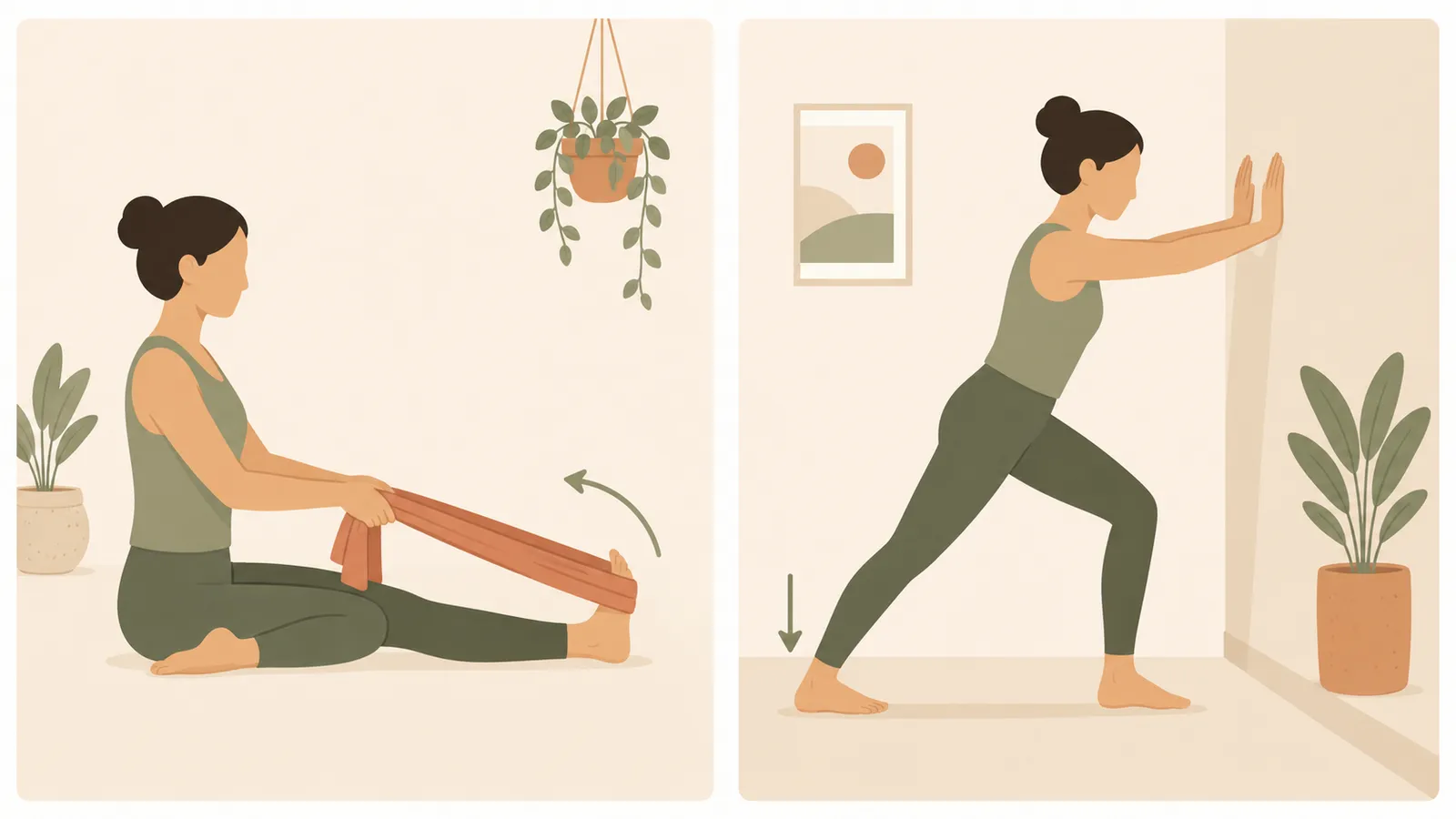
- Stretch your calves and the sole of your foot before and after running. Pushing against a wall to stretch the calf, or rolling a bottle or ball under your foot, are both easy to fit in.
- Check that your shoes still fit well and that the soles are not wearing down unevenly.
- If your foot is hot and swollen after a long run, ice tends to help more than heat. Wrap the ice in a towel so it does not touch the skin directly, and limit each application to 15–20 minutes. For morning stiffness, gentle warmth before stretching can help loosen things up. Heat or a foot soak on its own doesn’t directly treat the underlying condition, though. We cover when to use which in an earlier post.
See a doctor rather than trying to manage it yourself if the pain began after a fall or impact, is severe enough to make you limp, continues at night, or has not improved after two weeks. Numbness, reduced sensation, or significant swelling, redness, or warmth also warrant medical attention.
An Evening for Your Feet
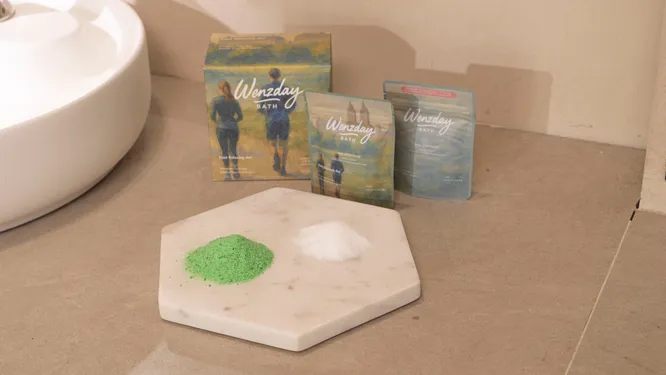
After a day that has asked a lot of your feet, a short pause can feel especially welcome.
OVER THE WENZDAY made Foot Relaxing Day for evenings like that. Made with Epsom salt and 16 traditional Korean herbal extracts, it is designed for a few quiet minutes with your feet in warm water after a workout. It is not intended to treat or prevent plantar fasciitis — just to offer a quiet way to close out a demanding day.
We’ve offered this product on our site for a while. This month, we’re launching its first crowdfunding campaign on Wadiz. The campaign goes live on September 16 at 1 p.m. KST. Details are on the Wadiz project page.