The Part of the Record Nobody Quotes
There are three days marked on the Korean summer calendar. They are called sambok, the three hottest days of the year, and they normally fall ten days apart, except this year, when the last one sits twenty days out: July 15, July 25, and August 14. Ask what people do on them and the answer arrives immediately and unanimously. They eat samgyetang, a whole young chicken simmered with ginseng. In Korea the search results are restaurants, recipes, and the price of chicken.
The Encyclopedia of Korean Culture has more on that line than food. Children and women ate melon and watermelon, it says, and the adults “went into the mountain valleys and did takjok, washing their feet, to escape the heat.” That is the whole mention. One clause, sitting right next to the food, describing something almost nobody does anymore.
They walked up to a stream and put their feet in the water.
Why Only the Feet
Takjok has its own entry in the Korean folk custom dictionary, filed as a summer practice. Not under medicine, not under health. Under games.
The obvious question is why the feet only, on the hottest day of the year, standing next to cold running water. The dictionary answers it in one flat line: “Scholars were reluctant to expose their bodies, so they put only their feet in the water.” They did not want to undress. So they walked uphill in full dress, in the heat, sat down on a rock, loosened their shoes and put in the only part of themselves they were willing to bare.
The paintings back it up. There is a whole minor genre of them: a man on a rock with his robe loosened at the collar, feet in a stream. The best known is Gosa Takjokdo, attributed to Yi Gyeong-yun in the late sixteenth century, and Yi Jeong and Choe Buk painted their own versions. In every one of them, the water stops at the feet.
Propriety is a slightly ridiculous reason to sit half-dressed by a creek. But look at what it produced. A whole class of people ended up with a summer habit of putting their feet in water.
The Point Was Not Cooling Down
The dictionary is doing something deliberate when it places takjok next to the food. It calls it a scholarly way to escape the heat, one that works not by driving heat away with dishes and devices but by forgetting about it somewhere out in the hills.
That framing is the interesting part. These days were never only about eating well. There was a way to rest well filed alongside, and the eating is simply the half that survived.
It was not only about the heat. Takjok was also described as a method of mental cultivation, something scholars did in mountain valleys to wash their minds clean. So the sitting was not preparation for anything. A man with his feet in a stream, doing nothing, had arrived at the point.
Even the name says so. It comes from a song about the Changnang river: when the water is clear, wash your hat strings; when it is muddy, wash your feet. The song is old enough that sources disagree about where it came from, appearing in the Mencius as something children sang and in the Chuci as a fisherman’s verse, borrowed by both from somewhere older. Clear or muddy, you meet the water where it is.
And those who could not reach a valley filled a basin at home and put their feet in that instead.
Cold Stream, Warm Basin
Here is where we have to be honest. The water those scholars sat in was cold mountain water, and coldness was the point in the middle of a Korean summer. Our foot soak gels are made for warm water. The temperature runs the opposite direction, and we are not going to pretend otherwise.
The same entry also explains the custom in its own terms: that the nerves of the whole body gather in the sole, so that soaking the feet cools all of you, or that moving water stimulates the paths that energy travels. That is a record of how people understood what they were doing. It is not something we can verify, so we pass it along as what it is.
What actually carries across the centuries is not the temperature. It is a person with their feet in water and nothing else scheduled. That is the whole of it, and people have kept doing it for a few hundred years to get through a hot summer.
And the Ginseng
If you have had samgyetang, there was ginseng in the bowl. It has been in that bowl for as long as anyone has been ordering it on these days.
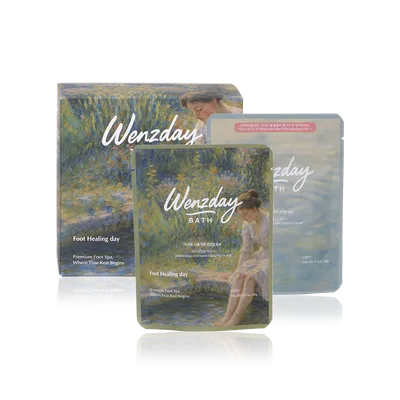
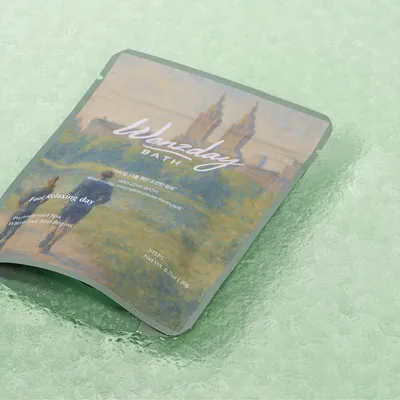
OVER THE WENZDAY’s Foot Healing Day and Foot Relaxing Day contain ginseng too, one of sixteen herbal extracts in the blend. Eating ginseng and dissolving it in water to soak your feet are not the same act and do not do the same thing in the body, and it would be dishonest to blur them.
Still, on a hot evening, sitting with your feet in water is not a strange way to spend twenty minutes. There is a long record of people doing exactly that when the year got hot.
Curious about the older Korean records behind OVER THE WENZDAY’s foot soak gels? Read why a Joseon king soaked his feet at noon, timed by a water clock, what ginseng does, and the easiest version of the Korean foot soak habit.