One infection, two very different reactions
The familiar picture of athlete’s foot is skin between the toes turning soft and raw, splitting, itching enough that it gets treated quickly. That’s a real and common presentation, and the itch does its job: it gets you to a pharmacy or a doctor.
There’s another pattern that looks almost nothing like it. Instead of raw skin between the toes, the sole dries out and flakes, sometimes across the whole foot, often with little or no itch. Because nothing hurts and nothing itches, it can be mistaken for ordinary dry skin for years, even though it falls under the same broad condition.
The difference is as much about the reaction as the fungus
Athlete’s foot isn’t caused by one single organism, and different species do turn up more often in one pattern than the other. The dry, flaking pattern across the sole, sometimes called moccasin type, is most consistently linked to the fungus Trichophyton rubrum. But the match between fungus and clinical picture isn’t clean. The same species can behave differently case to case, and appearance alone can’t always tell you which one you have, something we go into in more detail in our post on telling dry skin from fungal skin.
What seems to matter just as much as which fungus is involved is how strongly the skin reacts to it. Some infections trigger a visible inflammatory response: redness, blistering, itching. Others produce very little visible reaction at all. T. rubrum in particular is thought to produce compounds, including a cell-wall polysaccharide called mannan, that may dampen the skin’s local immune response, and researchers consider this one of several factors behind why some infections stay quiet and chronic rather than inflamed. Immune response, skin barrier, moisture, and how long an infection has been present likely all play a part together, rather than any single mechanism explaining it on its own.
Which is why it gets treated as dry skin
No itching and no raw skin makes dry feet the obvious guess, and lotion the obvious response.
A few nights of moisturizing can genuinely change how the skin looks. Water moves into the thickened outer layer, and flaking often eases up for a while. But lotion doesn’t do anything to a fungal infection if one is actually there, so if that’s what it is, the scale typically returns once the skin dries out again. That cycle can repeat for a whole season or more before athlete’s foot even enters the picture.
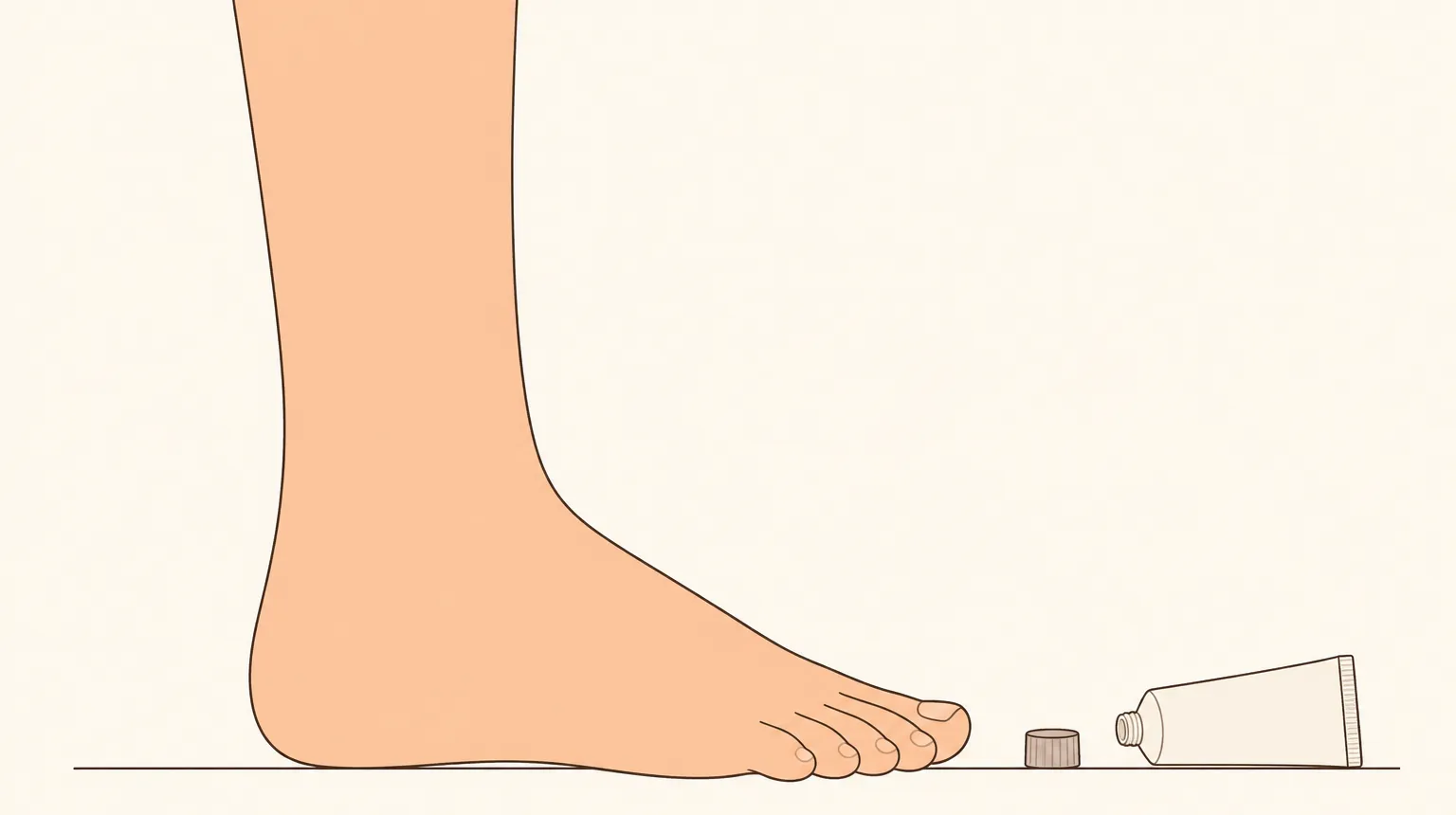
After a few nights of lotion, this is what it can look like: smooth and unremarkable. That's exactly why lotion can feel like the fix, even when a fungal infection is still there in the skin.
Where dry skin and fungal skin actually part ways in appearance is covered in more detail in that earlier post.
Going unnoticed for longer means more time to spread
Itch is usually what makes someone look closely at their own feet. Without it, discovery can take a long time, and the longer an infection goes unnoticed, the more time it has to spread elsewhere. None of this is a diagnostic checklist. Appearance alone often can’t confirm what’s going on, and several other skin conditions can look similar.
Left untreated for a long time, a fungal infection on the foot can spread to nearby skin folds that stay warm and damp, most often the groin. That groin patch is often self-inoculated, meaning it’s frequently the same infection moving from your own foot rather than being freshly caught from someone else, though where the original foot infection came from isn’t something you can determine on your own either. Similar patches sometimes turn up in other folds too, like the underarms or the backs of the knees, but those spots have more common causes that have nothing to do with athlete’s foot, so they’re especially worth having a clinician look at rather than guessing.
The active, spreading edge of a patch like this tends to look reddened with some scale. The center can be left looking like just a patch of darker skin, and that’s often what people notice first: not an itchy rash, just one patch that’s a different color than the skin around it.
Habits that limit the spread
Hands, clothing, and scratching can all move a fungal infection around the body, and towels are one of the more overlooked routes. Using the same towel on your feet first, then the rest of your body, can carry the fungus along with it.
Changing towels daily helps in general, and if someone in the household has an active infection, giving that person a separate towel for their feet specifically is worth doing. None of this treats an infection that has already spread. That needs an antifungal.
If your soles are flaking and you can’t tell whether it’s dryness or a fungal infection, moisturizing for a few nights is a reasonable first read, the way we described in that earlier post, but it isn’t a diagnosis by itself. If the flaking holds steady or keeps spreading despite it, or if similar patches are showing up elsewhere on your body, that’s the point to see a clinician rather than keep guessing.
Where an evening soak fits
If a fungal infection turns out to be the cause, antifungal treatment comes first. Everything above explains why this happens, not how to treat it, and an evening routine works alongside that treatment rather than replacing it.
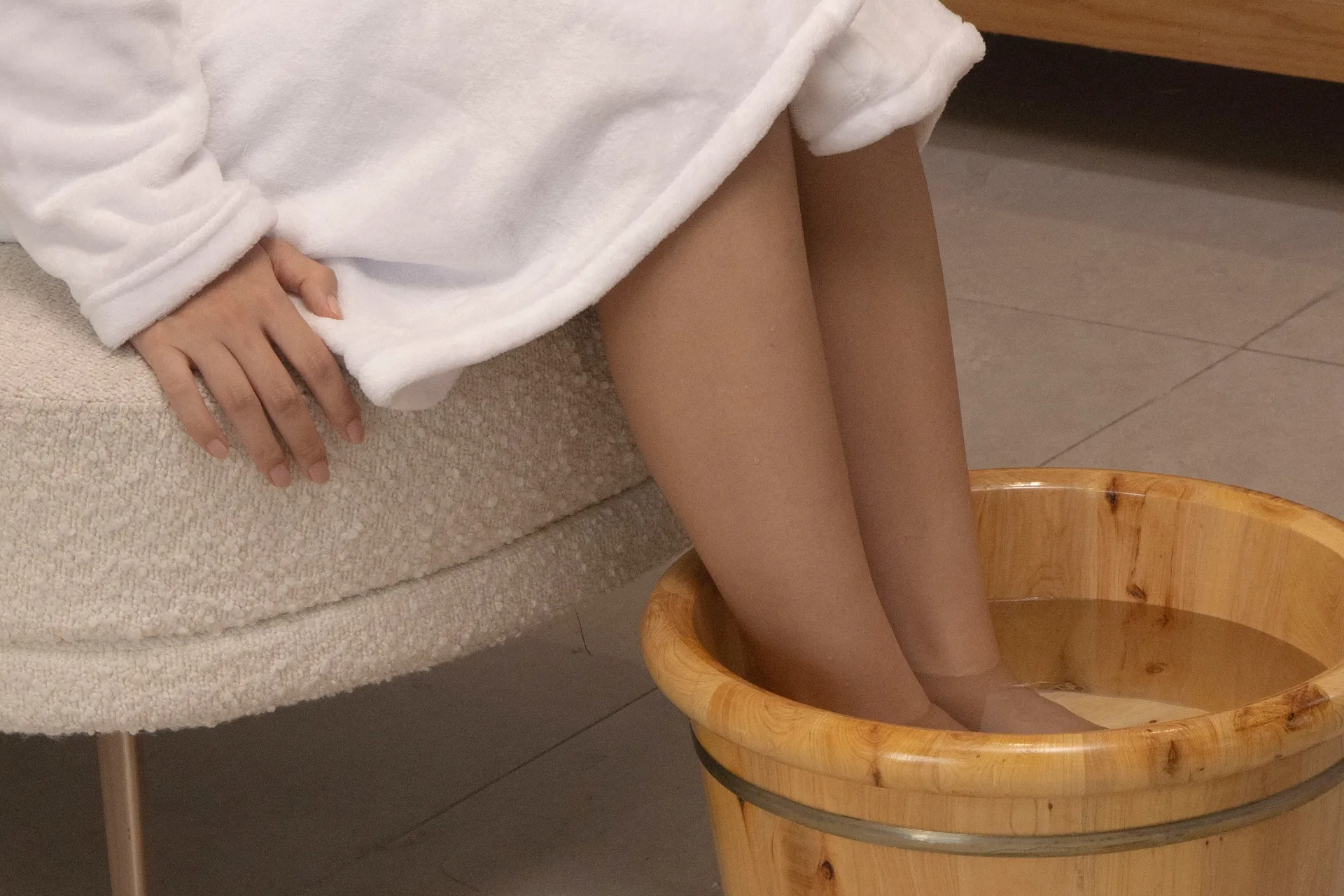
Washing your feet and drying them completely is one of the simplest ways to keep that environment less hospitable to fungus. If an infection has spread to a skin fold elsewhere, the same principle applies there too: dry that area as thoroughly as you dry your feet. Foot Relaxing Day and Foot Healing Day from OVER THE WENZDAY fit into that evening routine as a few minutes of warmth and rest for your feet. The soak itself doesn’t reduce fungus, so drying your feet thoroughly afterward is still what matters most. Skip the soak if the skin is cracked or weeping. See a clinician instead.
If you want to know how to tell simple dryness from fungal skin by appearance alone, read Athlete’s Foot Does Not Always Itch as well.